Picture
From the right: Dr. Achilli, the Ambassador of
Taiwan (Mr. Chou), and Dr. Yuan T. Lee.
A couple of weeks ago I had the great honor to be invited to spend a week in the beautiful country of Panama together with my long time friend and colleague Dr. Alessandro Achilli. Together, we recently published a paper on the mitochondrial DNA landscape of Panama (Perego, et al. PLoS ONE 2012) and we were asked to share our findings at the annex of the upcoming Biodiversity Museum in Panama City and at the Annual Panamanian Congress of Science and Technology at the City of Knowledge (Ciudad del Saber) next to the Panama Canal.
In addition to the two of us, other invited speakers included Nobel Prize winner Yuan T. Lee (Chemistry, 1986) and the current director of the National Human Genome Research Institute, Dr. Eric Green. The highlight of our trip was a special VIP dinner at the home of the Taiwanese Ambassador to Panama with other special guests, mostly scientists involved with the local science institutions. I had some of the best Chinese food in years! That is one thing I miss for sure about living in the States. This was my third time to Panama, but I have the feeling that it won't be the last. There are few ideas about possible future projects and I am excited about continuing this collaboration.


Picture
Recently, the National Geographic's Genographic Project launched a new DNA test kit called GENO 2.0. It is an autosomal DNA test that covers very specific nuclear SNPs providing information about the history of our genes including a survey of our paternal line (Y chromosome), maternal line (mitochondrial DNA), and the deep ancestry written in the autosomes. It will link our DNA to the history of humankind as it started in Africa tens of thousands of years ago, all the way to the present time. I just ordered my own test, even though they won't be shipped until the end of October. This test will also compare genes between humans and apes, and even Neandertals, looking for surviving rare genetic links between our species and our closest relatives in the evolutionary tree.

National Geographic has a strong pro-evolution agenda, which continues to stimulates all sort of interesting thoughts in religious arenas about harmonizing the biblical creation account with evidence (particular genetic evidence) from science pointing to evolution (something that I have also speculated about in the past). Interestingly, just today, someone in a forum that does not like LDS beliefs mentioned me in a dissatisfied manner stating that "an LDS scientist speculates if those in the past were even human." Believe it or not, I don't think I am the first one that postulated that there were hominids more than 6,000 years ago, but I am flattered if someone would think so.

Here is a video by the Genographic Project introducing the new test.


I recently published on the FAIR Blog a post called Misquoting Science with the objective of clarifying a statement that appeared in the June 2012 issue of Sunstone magazine. In a nutshell, the poorly formulated quote was yet another attempt to demonstrate how DNA science is the ultimate proof against the historicity of the Book of Mormon since no Israelite DNA could be detected in the Americas. I have addressed this issue in great length before here and spoke a little more about it at the recent FAIR conference (a full transcript will be available some time in September). However, I have been made aware of a comment posted on a forum not particularly fond of LDS beliefs, which reads:

"A full transcript of his presentation is not available yet but he has posted some of his words on the FAIR blog.

One of things I read in his blog concerned me. He said "I personally find it a very complex task to identify and clearly discern any non-Asian-like genetic signals in the New World that would have resulted from migrations that took place in the last couple thousands of years."

How does he square this statement with the fact that his Italian mentor Dr. Antonio Torroni and colleagues were able to determine a Near Eastern origin of the Etruscans?
http://www.ncbi.nlm.nih.gov/pmc/articles/PMC1852723/pdf/AJHGv80p759.pdf

'The origin of the Etruscan people has been a source of major controversy for the past 2,500 years, and several hypotheses have been proposed to explain their language and sophisticated culture, including an Aegean/Anatolian origin.'

'These findings support a direct and rather recent genetic input from the Near East—a scenario in agreement with the Lydian origin of Etruscans. Such a genetic contribution has been extensively diluted by admixture, but it appears that there are still locations in Tuscany, such as Murlo, where traces of its arrival are easily detectable.'

Dr. Perego would do well to explain why science works in Italy but not in America."

I have wondered why it took so long for anyone to bring this up. I am very familiar with the study my colleagues at the University of Pavia did on Etruscan DNA and I was surprised no one had yet correlated that study with the search for Near Eastern mitochondrial DNA lineages in the Americas. "Bravo" to the individual that has finally come up with this question and,  since this person was "concerned" about my statement and also calls for an explanation on "why science works in Italy but not in America," I am happy to write a couple of lines on my own blog with the hope that it will be a good educational opportunity to others, particularly to those that also commented on the above post.

First, I find it humorous (and I cannot resist, but have to write something here about it) that the original comment from Sunstone magazine did not receive a single note of criticism by those that are bringing up issues with my own comments. As long as someone having absolutely no credentials in the field of science is willing to openly criticize the Book of Mormon, he/she is immediately welcome by all those that share similar feelings toward that volume of scriptures. However, how dare I say anything on this very subject, having a PhD in population genetics (with a dissertation on Native American DNA), and having researched extensively about the origin of Native Americans through DNA, publishing the results with international collaborators in a peer-reviewed journal with a considerable high impact factor! But this is not all. Dr. Torroni and Dr. Achilli, the main authors on the Etruscan DNA study mentioned in the comment above, are among those that read and provided feedback to my own essay on DNA and Book of Mormon published in No Weapon Shall Prosper last year (see note at the end of the article).

Here is the problem, for anyone honestly interested in understanding how population genetics work: the study on Etruscan DNA proposes a genetic link (mitochondrial DNA only) between the population of modern-day Turkey (ancient Lydia) and a few villages in Tuscany, Italy (where Etruscans lived prior to their assimilation by the Roman Empire). This movement of people took place about 2500 years ago, which is about the same time when the Book of Mormon voyage of Lehi and his family took place toward the Americas. Why then can science work for the Etruscans and not for Book of Mormon people? Here are a few points that should help clarify the matter.

First of all, the Near Eastern origin of Etruscans is a theory, not a fact. Just like some individuals claim that Old World DNA in the Americas is a legacy of Book of Mormon migrants, not everyone agrees with that hypothesis. It is an idea that needs further investigation and does not provide conclusive evidence. So it is with the genetic origin of the Etruscans. The 2007 study by Achilli et al. stands on solid foundations and I strongly support their conclusions, but not everyone in the field of population genetics agrees with them. A more recent study (2009) using both modern and ancient mtDNA reached different conclusions, stating that "So far, the study of mtDNA has not substantially contributed to addressing the most debated question concerning the Etruscans, their origin." People disagree on conclusions drawn using genetic data to reconstruct ancient population migrations all the time. It is OK to have a preferred opinion or a favorite publication, but we must also acknowledge that there are others that don't see it the way we do.

If the genetic evidence is correct (based on the study by Achilli et al. 2007), we must then consider the next two points.

According to one tradition, the king of Anatolia sent half of his population to settle another area due to the fact that there was a severe famine in the land and not enough resources to sustain everyone. If this is the case, the number of people that left the ancient Near East and settled in Italy was not small. In contrast, when talking about Lehi and his family, we have a nucleus of about 15-20 people settling in a continent where tens of millions of indigenous Amerindians already lived. As I explained in my blog post, one of the problems in ensuring the survival of genetic signals into future generations was the size of the Israelite group within the much dominant Amerindian genetic landscape. Additionally, there are records that show where the ancestors of Etruscans landed and settled (the Italian region Tuscany was named by the Romans after the Etruscans), while the geography of the Book of Mormon is still a matter of debate even among LDS scholars. 

Next, the Etruscan mtDNA paper is a study about frequency and geographic distribution, not necessarily about age coalescence (see Figure 3). The mtDNA lineages observed in the Near East are similar to those observed in Italy, but not in other parts of Western and Eastern Eurasia. Thus the link about the ancient migration of the ancestors of Etruscans was proposed. In the Americas we also find a large number of Old World mtDNA lineages that are found in many parts of Europe and the Middle East. If we would apply the same criteria used in the Etruscan paper, we would also conclude that many individuals in the Americas have Old World origins. However, scientists feel more comfortable in assigning these lineages to post-Columbian introgression, thus excluding a priori any migration (or genetic evidence) to the Americas that took place within the last couple of millennia. And this is OK with me, because:

I still think that the primary reason why DNA cannot be used to test for the presence of Book of Mormon migrants arriving to the Americas in 600BC lies in the fact that it quickly disappeared due to genetic drift and the small size of the migrant group (and this is also the reason why it has not been detected in the few ancient DNA samples recovered and analyzed to date), as well as the obvious reason that we don't have the genetic profile of those arriving with Lehi to the Americas. We know something about their genealogy and we assume that their DNA would be the most representative DNA from the Middle East. But this is another straw man assumption. No one would accept the "assumption" of a genetic lineage as evidence in any modern-day legal, paternity, or forensic case. So, why is the fact that we don't know Lehi's genetic profile "proof" that the Book of Mormon people never existed?

If anyone wants to embrace genetic evidence for population migrations, he/she must also be willing to consider all the research that is available and the limitations proposed by the different authors, and not pick only what best suits their preconceived notions. Of course, when it comes to the Book of Mormon and anything that is considered "secular evidence," it is nearly impossible to be completely unbiased and that is why the final test is what the book call for itself (Moroni 10:3-5). 


No Weapon Shall Prosper: New Light on Sensitive Issues is a recently published volume (2011) by Brigham Young University Religious Studies Center, and edited by Dr. Robert Millet, former Dean of Religious Education at the same university. It is a collection of articles written by scholars from diverse fields and addressing topics that have been used by critics of The Church of Jesus Christ of Latter-day Saints to attack the Church, its history, or doctrines. I was asked to write an essay on the issue of DNA claims with regard to the historicity of The Book of Mormon, which during the past decade has been used both against and in favor of such argument. In one sentence, my conclusions could be summarized with a simple: "You cannot use genetic evidence to conclusively support whether The Book of Mormon was historical in nature, or not." What I mean with "conclusively" is that you cannot state that genetic evidence is sufficient to close the matter once and for all, one way or the other.

I recently found an online review for No Weapon Shall Prosper by Richard Packham, which included a section about my essay "The Book of Mormon and the Origin of Native Americans from a Maternally Inherited DNA Standpoint." (An earlier version of this article was published in FARMS Review in 2010).I have posted the full text of the review pertaining to what I wrote below, with the objective of addressing Mr. Packham comments, section by section.

PACKHAM: Ugo Perego, a geneticist at BYU, authored the article on how DNA research impacts the message of the Book of Mormon. Perego frankly admits that current DNA research on the origin of Native Americans cannot confirm the Book of Mormon by showing Israelite ancestry for them (p 182). He confirms the view generally held by authorities in the field that DNA research shows an origin for them in the area of Mongolia, and that they began to migrate to the Americas thousands of years before Book of Mormon times. Perego acknowledges that the entire human race is descended from a single woman who lived in Africa about 200,000 years ago (p 170).
PEREGO: For the record, I am not a geneticist at BYU. I received a BS and MS at Brigham Young University, but I have never been part of their faculty. I received a PhD in Genetics and Biomolecular Sciences, with an emphasis on population genetics, at the University of Pavia (Italy) under the mentorship of Professor Antonio Torroni. I have worked for the past decade in the private industry for the non-profit Sorenson Molecular Genealogy Foundation and taught Human Biology at the Salt Lake Community College as an adjunct faculty (both institutions located in Utah). A simple internet search would have provided this information. 
The purpose of my treatise in No Weapon Shall Prosper  was not to discuss the impact of DNA research on the message of The Book of Mormon, as stated by Mr. Packham, but on the misuse of genetic data in linking the origin of Native Americans with the historicity of The Book of Mormon, two topics that in my mind have to be addressed separately and with proper understanding of fundamental population genetics principles. Mr. Packham is obviously familiar with the topic, but he is definitely not an expert in the field of population migrations and genetics. He makes a couple of common misstatements at the beginning of his review that are often spelled out by those that have a superficial understanding of this topic: 1. A large subset of Native American lineages share a common ancient ancestry with Asian populations, which is substantially different from stating that they originated from Central Asia. In my article, I also explain that the currently accepted molecular clock for mitochondrial DNA allows for the splitting of deep lineages (i.e. ancient migrations that took place tens of thousand of years ago), but this instrument is often not adequate to successfully detect migrations that occurred in a relatively recent past (i.e. the last couple of millennia). Such a research as not yet been designed with the objective of studying lineages with no Asian affinity in the Americas, although there have been several instances in which additional, more recent pre-Columbian migrations to the Americas, including interesting DNA markers that could have a non-Asian origin, have been reported in the past. 2. Mitochondrial DNA evidence does not claim that all humanity descends from a single woman, but that all mtDNA lineages eventually coalesce in a single female ancestor. This is just one of the many ancestors modern humans have. Both of these points are extensively discussed in my essay, but have been ignored in Mr. Packham's review.
On a shorter note, Mr. Packham, as many critics of The Book of Mormon, enjoys dwelling on the fact that I have openly admitted the lack of Israelite DNA in the Americas. At the same time, he purposely neglects that in other parts of my essay I emphasized that we don't have a reference to be used when searching for Lehi's party DNA in the Americas and the many reasons why it would be nearly impossible to detect such a genetic signal even if we knew what we were looking for.

PACKHAM: In defending the Book of Mormon against the implications of these facts, Perego makes some astonishing claims. He claims that the Book of Mormon says nothing about "whether other populations were already established in the land" (p 163). He appears to want to ignore what God said to Lehi (2 Nephi 1:9) that Lehi's people would go to a land where they would be "kept from all other nations." Or God's assurance to the brother of Jared (Ether 2: that the land they had been promised would be preserved for them alone, so long as they remained righteous.
PEREGO: My "astonishing" claims are quite simple to understand in the context I originally made them. First of all I explain the vastness of the American double-continent and how The Book of Mormon states to be just a summary of several records spanning a period of 1000 years. Therefore, I am not surprised that such a volume does not mention clearly and unequivocally about other populations. The rate of population growth though is somewhat surprising and the fact that the faction labelled as Lamanites is growing considerably faster in number than their counterparts, the Nephites (given an equal rate of reproduction for both groups) would imply that in one case there could be rapid admixture with surrounding native populations, while the latter group attempted to remain homogeneous and keep things within the "covenant". Extensive warfare between the two factions during the same generation of their arrival to the New world would also imply recruitment of indigenous populations. Perhaps one of the strongest argument in favor of local inhabitants is found in the very book of Jacob, when Sherem stated that he "sought much opportunity " to speak with the leader of the Nephites (Jacob 7:6). Or when Mormon feels the need to state that he is "a pure descendant of Lehi" (3 Nephi 5:20). These and other statements in The Book of Mormon leave the door open to the possibility that other groups might have been present in the land. As Mr. Packham acknowledges (but also ignores in his review), the concept of inheritance of the land was tied to the righteousness of the people, which neither the Jaredites nor the Nephites kept as a standard of living until the end. Additionally, the concept of land could be referred to a geographic area either small or large. I have no preference in the geographic setting of The Book of Mormon and I leave it to others to discuss about a limited or continental setting for the events narrated in such volume, however, being The Book of Mormon a summary of a 1000 year history in just few hundred pages and due to the size of the American continent, I have no problem in considering that the record keepers and the man that claimed to have made a summary of such records left out many details about the population dynamics of their and other possible groups in the land. It is also plausible to interpret that "the other nations" from which our protagonists would be kept from were those that were a treat to them (the story tells of the destruction of Jerusalem and the persecution of Lehi as a good reason to leave their hometown and for the Jaredites it was the unrighteousness that reigned in the land at the time of the building of the Tower of Babel). This is very much in line with what motivated the first pilgrims to leave Europe in search for a place where they could exercise religious freedom and avoid persecution "from other nations" (the European ones).

PACKHAM: Perego gives no explanation for the fact that the Book of Mormon text makes no mention of encounters with people already there. When the Mulekites are discovered (Omni 1:14) there is a great todo, and the encounter is recorded. But that's the only such encounter or mention of other peoples. Compare that with the Israelites, who also were led to a "promised land." Their history repeatedly mentions their neighboring peoples, their wars with them, their victories over them, their intermarriages with them. Why - if a similar situation really existed with the Book of Mormon peoples - is there nothing of that nature? Perego comments that the Book of Mormon is a "sacred and religious history," but so is the Old Testament.
PEREGO: In my treatise I explain that the distance from Alaska to Tierra del Fuego is greater than that from Portugal to Japan. Considering the fact that The Book of Mormon states to be an abridgment of the most important events, it seems normal to me that there are no too many details about other populations and that not all the people that could have lived during that time and over the entire Western Hemisphere landmass were the object of the Nephites' record keeping. It is the story of the glass half empty or half full. In my mind, the fact that a group is mentioned (the followers of Mulek and a Jaredite survivor) is proof that other people were there and so could have been others. The comparison with the Israelite biblical record is somewhat not proper since Israel is only 8,000 square miles in size (compared to the 16,428,260 square miles of the combined North, Central and South America continent). Israel could fit into Florida 8 times being only 263 miles long and between 9 and 71 miles wide. Also, the Old Testament text does not claim to be an summary of other records, but a full account. The Nephites would have had an impossible task to fill if they wanted to include all the events of the Americas in their records, more so in the abridgment that was made by a single individual.

PACKHAM: Perego attributes the belief that the Book of Mormon should be seen as a history of the origin of ALL Native Americans to "a common sentiment" and "speculation" by both Mormons and non-Mormons. He seems to be unaware that the same "sentiment" was shared by the Angel Moroni and most Mormon prophets from Joseph Smith through Spencer W. Kimball. Did not Moroni say (JS-Hist 1:34) that the gold plates gave "an account of the former inhabitants of this continent and the source from whence they sprang"? Perego (and many other modern Mormon apologists) apparently read that as "an account of a tiny percentage of the former inhabitants of a little corner of this continent before they were swallowed up without a trace."
PEREGO: First of all, to be genealogically related is one thing and to carry the genes of our ancestors is another. I mention in my article (and it is an accepted principle in population genetics) that the genes of a colonizing groups have a close to zero chance of survival in future generations when competing with those of the hosting population. Additionally, it is also a matter of determining which groups survived, what happened to them after the end of keeping the records, and what dynamics were involved. The Book of Mormon is not a complete record when it comes to the history of these people and their genealogies. The Angel Moroni spoke of the "former" inhabitants, which means that they no longer exist. If they don't exist, then their DNA should not be easily detected in the modern native population. Apparently, this is a concept that Mr. Packham has a hard time accepting as it would not support his position.

PACKHAM: Perego concludes with the assertion that "Anyone using DNA to ascertain the accuracy of historical events of a religious nature - which require instead a component of faith - will be sorely disappointed." How is the origin of Native Americans a religious question? Only because the Mormons have made it so. Yes, if one wants to believe something which is unsupported by historical or scientific information, a large component of faith is required. Faith apparently always trumps science (a common theme in this collection). But DNA is used every day in criminal cases to determine the accuracy of facts.
PEREGO: The religious question is obviously not about the origin of Native Americans, but about the historicity of The Book of Mormon, which in my mind is not a record with the objective to provide a detailed and complete origin of these people. How is that science could support unequivocally the truthfulness of a religious volume? What kind of evidence would provide such proof as to convince those that cannot rely on faith, prayer or personal revelation (the common standards for most religious practices) that an an ancient record is divine in nature and not man-made? What type of DNA testing or research design would provide the accuracy of facts that are described in The Book of Mormon or in the Biblical text (or other religious records for that matter) from a DNA viewpoint? As a retired lawyer, Mr. Packham should know that in a criminal case, to reconstruct the accuracy of facts you would need both the DNA of the perpetrator and at the same time the DNA of a list of suspects in order to find a match. What was the DNA of the people in Lehi's party and how would we conclude that it is what we think it could be without a chance to actually test it? How could a case be closed if we are missing the very genetic evidence that we need to ascertain whether these people actually existed? Either Mr. Packham is oblivious about genetic testing for population studies, or he is so biased about Mormonism as to fail to accept the very principles that govern such science.
 
 
Today I read a couple of pieces in the news reporting a new study that will soon appear in the prestigious European Journal of Human Genetic journal. The running title for each story was quite sensational with a clear reference to Jewish DNA found in the Americas: "Israeli researchers: Group of Colorado Indians have genetic Jewish roots" and "Israeli researchers find American Indians with Jewish genetic markers". The title is comforting if you have desperately been waiting for someone trustworthy to report a genetic connection between the Old and New Worlds. I know few people that would jump all over this one. The study is interesting; no doubt about it. I can't wait to read the full paper in the journal when it will become available. The genetic link is also plausible, but be aware that according to the researchers, the dating of the BRCA1 gene (one of those associated with breast cancer) reported in the study is 600 years before present. The researchers concluded that these are conquistadores with Jewish blood that left Spain following the discovery of the Western Hemisphere by Christopher Columbus and immediately interbred with the local native population of Central and North America (as north as probably modern-day Colorado) thus leaving a genetic legacy of Jewish DNA in the modern indigenous population. While the distribution of the BRCA1 gene in Old and New World populations is pretty clear, the dating for such mutation and its arrival to the Americas leaves some room for debate.
 
 
It was recently brought to my attention that an online forum not particularly friendly to members of the LDS faith had an on-going discussion about the true reasons behind my recent relocation to Rome, Italy. The main point that appeared to be in agreement with all those participating in such exchange of thoughts was that I HAVE BEEN EXILED BY THE LDS CHURCH TO A FAR AWAY LAND (ROME) BECAUSE OF MY WORK WITH DNA. 
I have to admit that I was quite "honored" to be at the center of their attention, and a bit jealous that some people have so much time at their disposal to waste on such frivolous matters. Needless to say, it is not for me to judge how people use their time, but I did feel an urge to write up something of my own to properly explain the events of the past few months that lead to our move to Italy.
As I wrote online a while back, I was born and raised in Italy and moved to the United States when I was almost 22 (I was called to serve a LDS mission in California). With the exception of a small parenthesis between my mission and starting college at BYU, I spent nearly 18 years working on an education and enjoying wonderful professional experiences in areas I am greatly passionate about. More recently, soon after receiving my PhD in Genetics and Biomolecular Sciences in 2010, I felt strongly I wanted to pursue a full time career in academia. In addition to my research work in the field of population genetics and molecular genealogy, I began teaching part time courses in the biological sciences at a local college. Together with a deepened love for teaching sciences, I also developed a greater love for the classroom setting and for working with college-age students. This is why, when I learned about a job position with the Seminary and Institute program in Rome, Italy, I gave it serious consideration.
This is not the first time I have been doing work with the Church Educational System. As an undergraduate student at BYU, I took the seminary teaching preparation courses offered to those that are considering a full time career in that field. During that time, I was given the opportunity to teach the Doctrine and Covenants to two classes at the Highland School seminary in American Fork, UT. Next, I taught a Book of Mormon class as a graduate student at BYU. After graduating, I volunteered at the Salt Lake Community College Institute of Religion as a part time faculty for four years teaching courses on the Joseph Smith Translation of the Bible, the Pearl of Great Price and the Old Testament. I interrupted my teaching when I began working at my PhD at the University of Pavia in Italy. However, during my many trips to the motherland, I still provided lectures, firesides, and training at several faculty meetings and conferences, as time would permit. So, it is not like that I have changed my career path "completely"; it feels more like getting re-acquainted with an old love. Fortunately, I am at a point in my life where I can start a new job, while retaining the benefits of what I have done in the past. In other words, I am still planning to be involved with genetic research, collaborations, consultation and publishing as time will permit. I guess this is one of the blessings of not having a TV at home and not being able to sleep much at night!
Last, but not least, besides welcoming a new job experience among the youth of the LDS faith, I am also excited to provide my children with a full immersion experience in the culture of their ancestors, visiting beautiful places together, enjoy the great food this land has to offer (like if I need the extra pounds...), and, of course, the coming of the new LDS Temple just minutes away from where we live. 
 
 
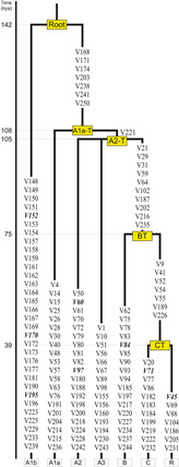
What is almost as good as publishing a paper in a peer-reviewed journal? What about getting your own DNA sequence published! This happened to me last year in the American Journal of Human Genetics (IF = 11.680) by the group at the Universita' La Sapienza in Rome, Italy. The article "A Revised Root for the Human Y Chromosomal Phylogenetic Tree: The Origin of Patrilineal Diversity in Africa" by Cruciani F., et al. brings the coalescence time of the common male ancestor of anatomically modern humans back to an additional ~70k years from the previously accepted ~60k estimate. One of the "ancient" male-inherited Y chromosome haplotypes employed in this study was indeed mine! (See image below). 

I previously included something about the "weirdness" of my Y chromosome in the treatise I published on the issue of DNA and Book of Mormon (FARMS Review, 1, 2010, pp.191-227). At that time, this is what I wrote about it:
"I was born and raised in Italy and can trace my paternal ancestry back several generations to the mid-seventeenth century AD. However, my Ycs belongs to haplogroup C, which has a frequency in southern Europe of less than 1 percent. Haplogroup C is mostly found in east Asia with a branch (C4) found among the aborigines of Australia. How did haplogroup C become part of my paternal ancestry? One possibility is that it is a remnant from an ancient military expansion from the East (e.g., Mongols or Huns) that reached to northern Italy."

Having worked in the molecular anthropology and genetic genealogy arenas for the past decade, it was natural that I wanted to run some analyses on my own DNA and learn about my genetic origins. However, the journey turned out to be a lot more fascinating and complex than expected. Earlier results from specialized labs placed my haplotype all over the Y chromosome phylogenetic tree. I was first assigned to haplogroups F, J, R, and I, with different level of confidence. Ultimately, I had my DNA tested at Stanford University (Dr. Peter Underhill's lab), with the Genographic Project, at the University of Pavia, Italy (Prof. Ornella Semino's lab), and at the University La Sapienza in Rome, Italy (Prof. Rosaria Scozzari's lab). Each lab performed extensive SNP testing on my Y chromosome and the consensus was that I belonged to a yet to be classified lineages within the C branch of the Y chromosome phylogeny. My Y chromosome was temporarily placed in the paragroup C*. The publication in the AJHG last year is an additional step forward in understanding something about the intricate history and origin of my paternal lineage, which is not only very rare in the general worldwide population, but it is also very ancient in origin. The journey continues...
Picture
Figure 1 from "A Revised Root for the Human Y Chromosomal Phylogenetic Tree: The Origin of Patrilineal Diversity in Africa" by Cruciani F., et al. AJHG, June 2011, pp.814-818. The single Y chromosome lineage belonging to haplogroup C is my own.
 
 
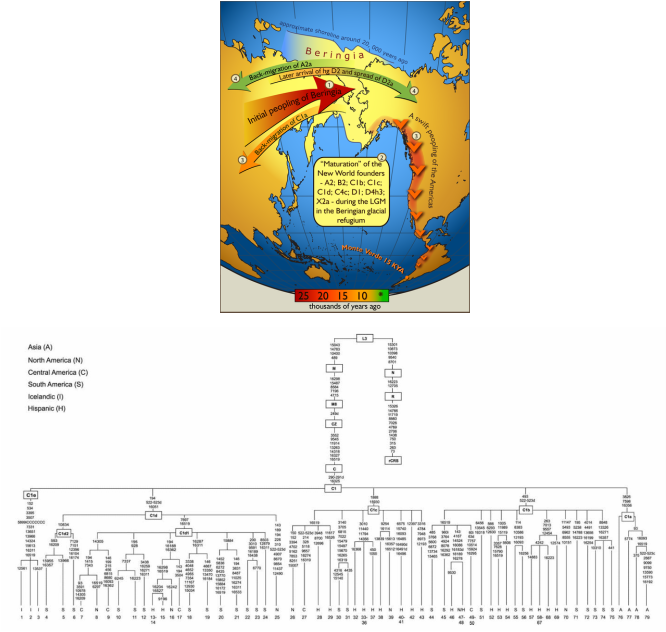
The American Journal of Physical Anthropology (AJPA) recently published an article by Ebenesersdottier et al. dealing with a newly discovered mitochondrial DNA (mtDNA) lineage: A New Subclade of mtDNA Haplogroup C1 Found in Icelanders: Evidence of Pre-Columbian Contact? This paper is particularly interesting to me as I recently published an article in Genome Research about another C1 lineage. In fact, prior to the new study in AJPA, the known mtDNA C1 lineages were: C1a, found at very low frequencies in Asia, and C1b, C1c, and C1d (the latter being the subject of my recent publication) who are autochthonous to the Americas. As a reminder, mtDNA is inherited exclusively along the maternal line and therefore it offers a female perspective about human evolution, expansions and migrations from a female viewpoint (Achilli and Perego, 2010). Tamm et al. 2007 was the first study proposing the origin and dispersion of these four C1 lineages (see figure below). In that work, the authors proposed a differentiation of the C1 subclades in Beringia during the Last Glacial Maximum, approximately 20,000 years ago. This time also corresponds to the mtDNA mutation estimate for C1 as a whole. Tamm et al. suggested that after differentiating -- and following the improvement of climate conditions -- C1a returned to Asia, while C1b, C1c, and C1d found their way into the pristine American double-continent. These three lineages are found at different frequencies in tribal groups of North, Central and South America, thus being true pan-American haplogroups. C1d is the rarer of the three and the reason I decided to study it in greater details in my last publication. 
Now, a fifth C1 lineage has been reported in Iceland. How does it fit with the rest of the mtDNA C1 picture? Genealogical and phylogenetic analyses of the Icelandic C1 haplotype (called C1e) revealed that its presence in Iceland is indeed quite ancient, and not the result of recent admixture, as it was initially postulated. The Icelandic C1e is characterized by a set of 11 control and coding region mutations that distinguish it from its four sister clades. A survey of worldwide mtDNA samples (both complete sequences and control region haplotypes in modern and ancient mtDNAs) identified a single sample sharing C1e characteristics in a German individual. Because of its rarity in Western Eurasia, the authors excluded the Old World as the cradle for the novel Icelandic mtDNA. However, there is enough evidence to conclude that such lineage has been present in the Icelandic mtDNA pool prior to the arrival of Christopher Columbus to the Americas, thus raising the question about a possible pre-1492 contact between Icelanders and American's natives. The highly disputed and controversial Solutrean Hypothesis, which proposes a genetic and cultural contribution from the Old to the New World across the ice-cap that once connected the two landmasses in the Northern Hemisphere could be resurrected after the discovery of this new mtDNA lineage. However, the authors feel more comfortable with the possibility of Viking voyages between Iceland and northern North America that resulted in the migration of at least one Native American woman (carrying the C1 lineage) back to the Old World. Since no C1e lineage has been detected in modern American indigenous populations, the authors emphasized that "given the rather drastic population size reductions that resulted from the actions of Europeans after 1492, it is quite possible that the C1e lineage was once carried by, but has now been lost from contemporary individuals with Native American matrilineal ancestry."
Such discovery has a number of implications in the ongoing debate of DNA vs. Book of Mormon:
1. We are reminded once more that we are dealing with related sister clades, but we still don't know much about their ancestral nodes. In other words, we know that C1a is found exclusively in Asia, that C1b, C1c, and C1d are indigenous mtDNA lineages of the Americas, and now we know that C1e is found in the Old World. However, no traces of the ancestral C1 haplogroup in modern populations has been found, thus leaving us with an estimate age for its existence (approximately 20,000 years ago, Perego et al. 2009), but not an exact geographic location for its origin. The common ancestor for all the C1 lineages was not necessarily at the branch point of the migration -- e.g. if the founders of two populations originally co-existed in the same region (and shared a common ancestor thousands of years prior) and then both migrated somewhere else and founded a population in their new regions, it can't necessarily be assumed that they lived in the same place, but only how far back that common ancestor lived. If Beringia once housed C1 mtDNA lineages, then the only explanation is that C1e was one of the Beringian clades, which then migrated to Iceland before disappearing in the American continent. Possible, but a bit of a stretch. It definitely leaves rooms for additional explanations.
2. As of today, no evidence of C1e in the modern American population has been found. This would be further confirmation that certain mtDNA lineages could have been part of the historical genetic pool of Native Americans, but that it has disappeared in our days. If C1e was in the Americas and then it disappeared, couldn't the same thing have happened to other maternal lineages as well?
3. If C1e is instead an Old World mtDNA lineage (a sister clade distantly related to the Asian-American ones), then a similar argument could be proposed for haplogroup X2a, which is also found exclusively in the Americas and it is quite different from its Old World counterparts. In other words, all these lineages share a common ancestor, but we are unsure about when and especially where these female progenitors once lived (including how the lineages expanded from the original geographic region to their current locations). Tamm et al. 2007 figure (below) would need to be updated to include possible migratory and expansion routes that would include the newly discovered C1e lineage.
In conclusion, it appears that as new mtDNA lineages with Native American affinity are identified and made available through scholarly publications, the question surrounding the peopling of the Americas and the contacts these Natives may have had through the millennia with Old World migrants is far from being completely resolved. As the authors of the current study put it,  "although the complete sequence of the Icelandic C1 lineage fully resolved its position in the human mtDNA tree, the mystery surrounding the lineage's geographical origin has only deepened." This is basically the case for all Native American mtDNA clades.
Picture
Above: Figure 2 from Tamm et al. 2007 indicating the migration directions for C1a, C1b, C1c, and C1d from their refugium in Beringia. Below: Figure 5 from Ebensersdottir et al. 2010 indicating the phylogeny of all known complete mtDNA sequences belonging to C1.
 
 
The following are short notes from a lecture given by Dr. Alan Rogers, professor of Population Genetics and Evolutionary Ecology at University of Utah's Department of Anthropology. The lecture was given on January 27, 2011 in the Gould Auditorium (Marriott Library) on the UofU campus.

EVOLUTION

Why skepticism?
- It is because of the concept of species changing?
- Or, changing into a new species?
- Can a species undergo significant changes?

Few people still doubt it based on micro-evolution examples such as resistance to penicillin and pesticides developed by bacteria and insects respectively.
However, what about new species?
- Doubling, tripling genomes (see the example with Primrose)
It is becoming harder and harder to argue that evolution is limited to only small changes.

Dr. Rogers used the example of the eye to discuss complex adaptation.
- lens vs. retina
- retina useless without lens
- how would selection favor a partial eye?

Charles Pritchard (1866)
- He was the first one to argue that the eye could not evolve.
Charles Darwin (1872)
- He was the first one to refuse Pritchard's argument. However this argument would last.
Weakness of Pritchard's argument:
- The claim is about plausibility. To refute such claim you need to invent a plausible story.
- There is no need for evidence. 
- There is no need for the story to be true.

Hypothetical steps in the evolution of the eye:
A. Eye spot - simple eye, but very sensitive to light from all directions
B. Eye cup - light prevented from extreme angles.
C1. Pin-hole camera eye - forms image, not much light, very dim.
C2. Primitive lens - secrete mucus (easy to produce), denser than H2O, will refract light, only sensitive to direct light found straight ahead of the eye.

Next: improvement of the eye --> Need a vertebrate eye.
Are the steps plausible?
- Yes, they are all found in living organisms today.
- Eye evolution is possible. Pritchard was incorrect.

How did the eye evolve?
- Darwin's prediction: retina evolved earlier then came the lenses --> we can test this hypothesis by looking at living animals.
- We all share common characteristics because we have inherited genes from common ancestors.
We need to start at the basis, the protein level. Opsins are light sensitive proteins. Every animal that sees does so because of the presence of opsins. Similar species have similar opsins.

When cells divide, DNA duplicates. Sometimes the machinery stutter and the DNA is duplicated twice. When you have two copies of the same gene, the new copy may provide new functionality. 

We need to observe what humans have in common with their closer relatives, the apes and old world monkeys. We have one opsin that adapted to dim light and three for color vision. Most mammals only have two for color and this is why they are colorblind. The reason humans, apes and monkeys have three for color is due to the fact that our common ancestor experienced a duplication in the DNA sequences thus resulting in one extra copy for that particularly opsin. 

Evidence of common descent in opsin: closely related species have similar opsin molecules. Humans have similar opsin proteins to insects and cephalopods

Crystallins: transparent proteins used in lens and cornea.
- If lenses evolved early, humans and insects should have similar crystallins. But they don't because the lens came later. Insects and cephalopods have very different crystallin proteins from humans.

What about eye morphology?
Vertebrates have eyes that work like cameras. All arthropods have compound eyes (including trilobites). Snails however have a great variety of eyes (they evolved in different varieties). Heteropod sea snail has eyes like slits, with a field vision of 180 degree wide, but just few degrees high. Eye scans are done with rapid movements up and down


A few years ago, I was invited to attend a presentation about a proposed setting for the Book of Mormon in North America (more specific in the Great Lakes area). The speaker was Rod Meldrum. I never heard of him before, but the theory of the Great Lakes, particularly with reference to the narrow neck of land (see for example Ether 10:20 and Alma 22:32) in connection to Lake Erie and Lake Ontario, was not entirely new to me.  The presentation was nearly four hours long and it was being videotaped. I have to admit that it was an interesting proposition and the speaker made reference to numerous historical and scientific citations to corroborate all his points. I took considerable notes with the purpose of checking those references myself later, then at the end of the presentation, I introduced myself to Rod Meldrum. It appears that he already knew about me and asked for a personal meeting, to which I agreed. In the following few months, I had the opportunity to visit with him at my office with the purpose of discussing the genetic component of the theory he was so passionately promoting. At that time, I was working on my PhD in human genetics with an emphasis on reconstructing the origins and migrations of America's indigenous inhabitants using mitochondrial DNA as a population expansion marker. I thought that the main reason Meldrum wanted some time with me was to explore in greater details the validity of a possible connection between Book of Mormon people and North America. I showed him all the flaws, shortcuts, limitations, and exaggerations involved with such assumption, assuming that he was honestly seeking for truth and understanding. Later however, I learned that he was trying to recruit me as a scientist that would endorse his work and, because I was not willing to embrace his plans, I eventually became the bad guy (see for example Rod Meldrum's 5-star endorsement to his OWN volume "Prophecies and Promises: The Book of Mormon and The United States of America" at Amazon.com, where he refers to me as a "puppet geneticist").
I have already addressed several of the problems with considering DNA as evidence against OR in favor of Book of Mormon historicity in an essay that was published last year in FARMS Review, a publication by the LDS Church's endorsed Neal A. Maxwell Institute for Religious Scholarship. Two important reviews about Meldrum's DVD "DNA Evidence for Book of Mormon Geography" and book "Rediscovering the Book of Mormon Remnant through DNA" are found HERE and HERE, respectively. 

Today, I learned about an official statement made by a number of anthropologists that have been contacted and interviewed with the purpose of sharing information about the history and culture of ancient North America inhabitants for the DVD production "The Lost Civilizations of North America." This material was later deceitfully edited to sound as if the individuals interviewed were confirming the evidence of a cultural and genetic contribution to New World civilizations in the Great Lakes area that originated from the Old World. Glenn Beck recently featured this documentary in his show and due to Beck's popular following, the DVD also became a hot item to support the theory of a North American setting for the Book of Mormon. Rod Meldrum is using this material to support his work and recruit more followers. The statement from those that were invited to contributed to the making of the DVD reveals the true nature of the work promoted by Meldrum and his associated. The original text is found at The Hidden Archaeology Blog and it is reported in its entirety here:


STATEMENT ABOUT "THE LOST CIVILIZATIONS OF NORTH AMERICA" DVD
The following is a statement jointly authored by myself and the several other scholars indicated regarding our participation in the recent video production, “The Lost Civilizations of North America.” Given the notoriety this video has received (it was discussed by Glenn Beck on his television program), we felt it necessary to make the following statement a matter of record. I urge anyone who has any questions not answered by the statement to contact me.

Brad
________

As scholars committed to increasing public understanding of Native American history and archaeology, we want to make it clear that we do not support the theories presented in “The Lost Civilizations of North America” DVD. In our opinion, there is no compelling archaeological or genetic evidence for a migration from the Middle East to North America a few thousand years ago, nor is there any credible scientific evidence that Old World civilizations were involved in developing Native American cultures in pre-Columbian times. Many of the artifacts used to support the film’s claims, such as the Newark “Holy Stones,” have been proven fraudulent based on convincing scientific evidence and historical documentation. Like the great majority of professional archaeologists and anthropologists, we have seen overwhelming evidence that Native Americans were independently responsible for designing and creating the Newark Earthworks, Cahokia Mounds, and the myriad other pre-Columbian sites across the United States.

Each of us was interviewed for this film. None of us was asked directly for our opinion on what turned out to be its underlying claim; that Old World civilizations played an active role in the development of Native American cultures, especially the mound builders. Instead, we were asked general questions about Native American societies, their remarkable technological achievements, genetic histories, and we were also asked to comment on the biases of many nineteenth-century historians and archaeologists concerning the abilities of the native people of North America. We fear that the context of our general remarks as they currently appear in the film might lead viewers to conclude that our words on these subjects provide support for the film’s claims. That would be a mistake. In fact, our remarks, if presented in an unedited form, show clearly that we reject the assertions made in the finished documentary concerning a non-native source for the complex cultures of Native America.

We informed the filmmakers of our objections in February 2010, five months before the DVD’s release. The producers did make some changes in response to our objections, including deleting Ken Feder’s interview entirely. As a group, we believe that the final product remains misleading and presents claims that neither we nor our data support. In our opinion, there is no compelling evidence for the presence of Old World cultures in North America prior to the incursions of the Norse in the early 11th century.

Sonya Atalay
Assistant Professor of Anthropology, Indiana University*

Terry Barnhart
Professor of History, Eastern Illinois University*

Deborah Bolnick
Assistant Professor of Anthropology, University of Texas at Austin*

Ken Feder 
Professor of Anthropology, Central Connecticut State University*

Alice Kehoe
Professor of Anthropology, emeritus, Marquette University*

Brad Lepper
Curator of Archaeology, Ohio Historical Society*

*We provide the names of our respective institutions here for identification purposes only. This is not meant to indicate that these institutions endorse our views.